Clogged drains sneak up like sneaky little troublemakers, starting small before they throw your whole day off track. When the sink drains slow, the shower fills with water, or the toilet drags its feet, those are signs the pipes are yelling for help. Fixing the problem fast stops bigger messes and costly repairs in their tracks, and keeps pipes from wearing out or getting gunked up even worse. Knowing this secret can save a lot of stress and money, especially if dealing with a busy kitchen or bathroom where every minute counts. Keep reading to unlock simple tricks that prevent these plumbing problems from turning into disasters.
This article walks through the common causes of clogs, clear signs to watch for, practical do it yourself methods for clearing clogged drain lines, and when it is wiser to bring in a trained technician. You will read tips you can use right away and realistic expectations for repair costs and scheduling so you can make confident choices for your home.
Causes of Clogged Drain Lines you should know
Understanding why drain lines clog helps you prevent the next headache. Most blockages form where debris, oils, or mineral scale collect and reduce flow. Typical sources include hair and soap in bathroom lines, grease and food scraps in kitchen pipes, foreign objects in toilets, and tree roots invading older clay or cast iron sewer lines.
- Hair and soap scum form a mat that traps other particles and shrinks flow over time.
- Grease and food that goes down the sink solidify and adhere to pipe walls.
- Mineral buildup from hard water narrows pipes gradually, cutting flow and accelerating clogs.
- Roots and structural issues in sewer lines can create partial collapses or persistent blockages.
Early signs that your drain line is clogged
Catch a clog early and you can fix it with minimal effort. Look for these warning signs and act promptly if you notice them.
- Slow draining sinks or tubs that take much longer than usual to empty
- Gurgling noises from drains when other fixtures run
- Water backing up into other fixtures, like a sink filling when you flush the toilet
- Foul sewer or rotten egg smells coming from drains
- Repeated clogs in the same fixture
DIY steps for clearing clogged drain lines
Many clogs are manageable without calling in outside help. These steps focus on safety and common sense. When you apply them one at a time you can often restore flow quickly and avoid damage to pipes.
Tools and supplies to have on hand
- Plunger for sinks and toilets
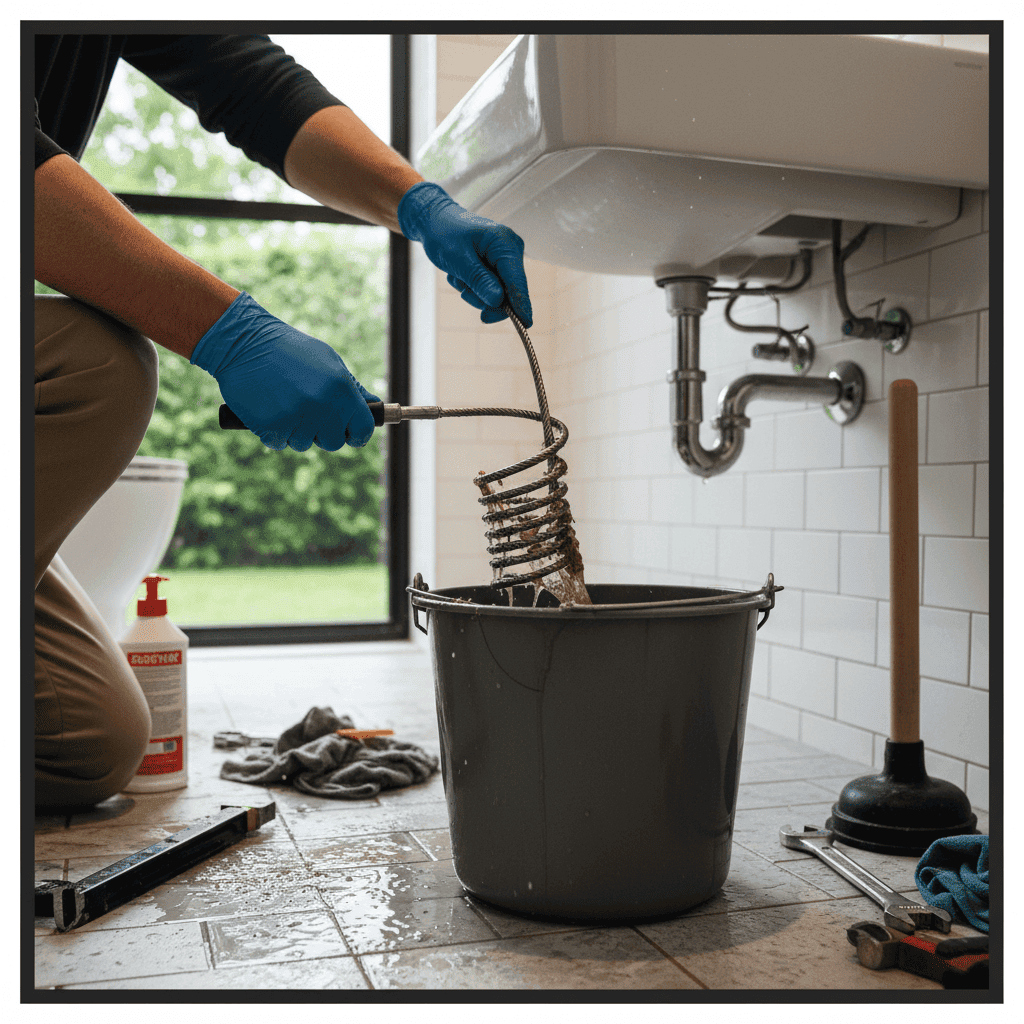
- Drain snake or auger for reaching deeper blockages
- Manual removal tools such as a drain hair remover or needle-nose pliers
- Bucket and towels to contain spills
- Gloves and eye protection
Step by step clearing clogged drain lines at home
Start with the least invasive methods and move to tools designed to reach deeper blockages. For sinks and tubs begin with a plunger. Seal the overflow or adjacent drain with a wet rag so pressure builds. If the plunger does not restore flow, try a hand auger. Feed the cable into the drain, rotate the handle, and withdraw debris slowly. For hair clogs near the surface a dedicated hair remover can extract the mat that traps soap and grime.
Avoid pouring harsh chemical drain cleaners. They can damage older pipes or make conditions worse when they do not clear the entire obstruction. Mechanical removal is safer and removes the substance causing the restriction so it does not return quickly. When working under a sink take time to check the P trap for collected debris. Removing and cleaning the trap often fixes kitchen and bathroom sink slow drains.
When it is time to call a professional drain cleaning service
There are moments when a clog signals something beyond a simple blockage. If multiple fixtures are affected, if water backs up into bathtubs or sinks when you flush another toilet, or if you detect sewer smells, the problem may be in the main sewer line. At that point hiring a skilled provider is the practical choice. A trained technician can locate and address the source safely and quickly.
Routine preventive work and larger jobs are where a service that offers professional drain cleaning can be valuable. They can perform camera inspections, remove root intrusions, and repair or replace damaged sections of pipe. Call a service if you have recurring clogs, if plunging and snaking fail, or if you prefer a long term fix rather than repeated short term efforts.
Tools and techniques professionals use for clearing clogged drain lines
When a plumber arrives they bring tools that save time and reduce guesswork. Understanding what they use helps you see the value of hiring expert help for complex problems.
Camera inspection and locating the issue
Video inspection equipment allows a technician to send a small camera through a sewer line to see the blockage, measure the length of problematic pipe, and identify cracks or roots. This avoids unnecessary digging and provides a precise diagnosis.
Hydro jetting and mechanical removal methods
Hydro jetting uses high pressure water to blast away grease, scale, and roots and is often the most thorough way to clear heavy buildup. Mechanical augers and motorized snakes remain common for many types of blockages, and cutters or root saws are used when vegetation invades the line. After clearing the line a follow up inspection confirms flow has been restored throughout the system.
Preventive maintenance to keep drain lines clear
Regular care reduces the odds of emergency clogs. Establish simple habits and occasional checks that limit buildup and detect problems early.
- Use drain screens to catch hair and food particles
- Dispose of grease in a container and throw it in the trash rather than pouring it down the sink
- Flush drains monthly with hot water or a safe enzymatic cleaner to reduce organic buildup
- Have drains inspected periodically if you live in an area with aging sewer infrastructure or trees near sewer lines
- Address slow drains promptly rather than waiting until a complete backup occurs
Cost factors and what to expect when clearing clogged drain lines
Price depends on location of the blockage and the method needed to clear it. A simple service call to plunge and snake a sink is generally the lowest cost. Jobs that require camera inspections, hydro jetting, or trenching to repair sewer lines are more expensive. Ask for an itemized estimate so you understand the work and the materials involved.
When comparing offers look for clear explanations of the diagnosis and the warranty on parts and labor. A provider who explains the difference between a temporary removal of material and a full cleaning that restores pipe capacity helps you choose the right level of service for your situation.
Troubleshooting tips for recurring drain line clogs
If a clog returns after treatment think about three areas that often lead to recurrence. First, the material that caused the clog may remain embedded in the pipe, requiring a more thorough cleaning. Second, the pipe may have a crack or sag that traps debris. Third, external pressure from tree roots or soil movement can create ongoing intrusion. Addressing the underlying cause prevents repeated calls and expense.
- Keep a log of when clogs occur and what fixtures are affected
- Note any nearby landscaping or recent construction that might have impacted sewer lines
- Request a camera inspection if clogs persist after two or three treatments
Clearing clogged drain lines is often a mix of quick action and sensible prevention. Small problems are easy to fix if you know the right steps to take and have a few basic tools on hand. When an issue goes beyond a local clog and affects multiple fixtures or produces sewer odors, bringing in a licensed technician with inspection and high pressure cleaning capability saves time and reduces repeat problems. Regular maintenance, such as using drain screens and avoiding grease in sinks, reduces the chance of inconvenient backups.
If you run into a stubborn clog or suspect damage to a main sewer line act sooner rather than later. A timely call can keep repairs from escalating into major plumbing work and deliver a clearer result that lasts. Keep the tips here in your home maintenance notes and arrange professional service when the situation exceeds simple DIY methods.
Ready to resolve a persistent drain issue or set up preventive care for your home drains Contact a local plumbing service to schedule an inspection or cleaning. A professional visit can identify hidden problems that lead to repeated clogs and provide options that match your budget and timetable. Quick steps at home plus occasional expertise from a qualified provider give the best protection against messy backups and unexpected plumbing emergencies.